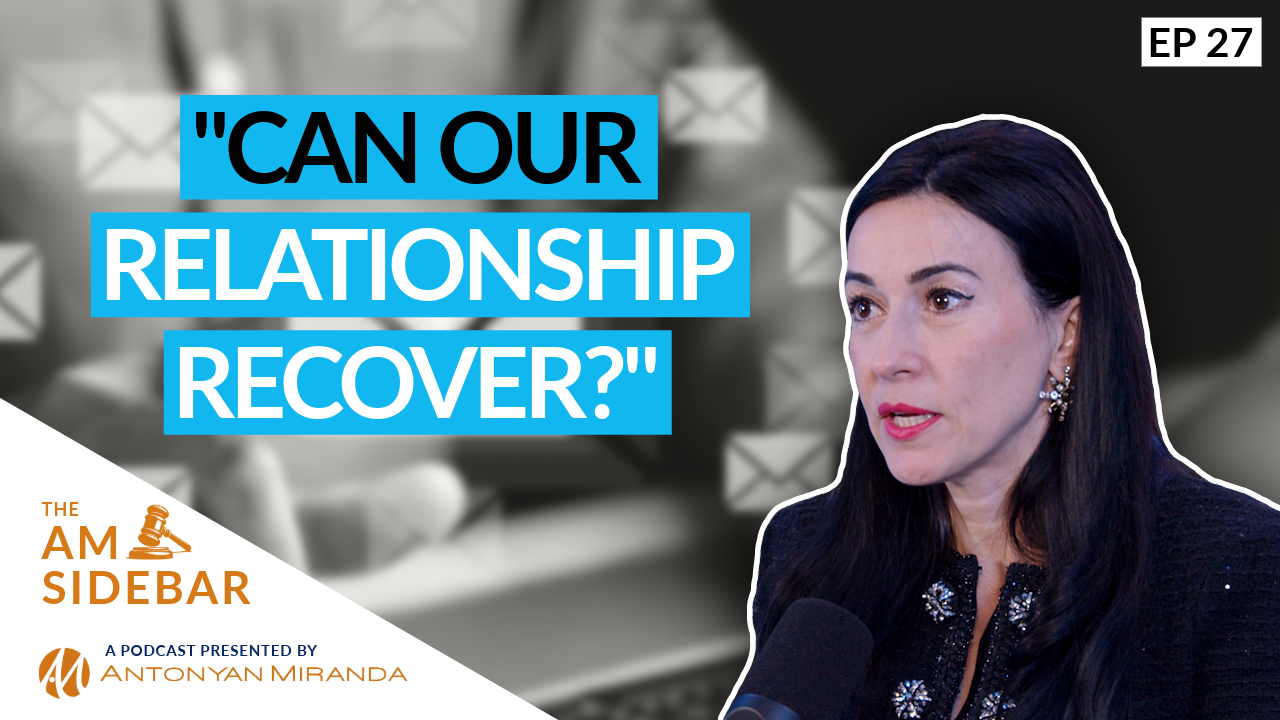

Could a single text message hurt your divorce or child custody case?
In this episode of Monday Madness, Andrew Rosenberry explains how text messages can become powerful evidence during divorce proceedings and custody disputes.
Many people assume private messages are harmless. In reality, texts can be presented in court and used to evaluate emotional control, co-parenting behavior, credibility, and compliance with court orders.
⚖️ Topics Covered:
✔ Divorce and custody communication
✔ Text messages as legal evidence
✔ Hostile co-parenting concerns
✔ The dangers of late-night texts
✔ Admissions against interest
✔ Financial disclosure mistakes
✔ Court order violations
✔ Third-party text message risks
✔ Family law best practices
✔ Emotional control during litigation
✔ Co-parenting communication tips
✔ Divorce attorney advice
Learn why angry messages, admissions, and even conversations with friends or family members can become evidence in court and potentially affect custody decisions.
This video also discusses practical communication strategies, including taking time before responding and using tools to review the tone of messages before sending them.
Whether you're involved in a divorce, child custody dispute, visitation case, or family law litigation, understanding how courts view digital communication can help protect your legal interests.
Need Family Law Help?
Contact Antonyan Miranda for guidance regarding divorce, custody, visitation, and family law matters.
"You should never send these texts during your divorce or custody battle.
Welcome to Monday Madness. My name is Andrew Rosenberg and I am a certified family law specialist in Southern California and today we are talking about specific types of text messages that can damage your case. A single impulsive message can become evidence of an inability to exercise emotional control or even as evidence of hostile co-parenting. Let's talk about the angry 2:00 a.m. text.
When I see messages like this, the first thing that comes to mind is what is this person doing up at 2:00 a.m.? Many of these text messages are rambling, aggressive, sometimes incoherent, leading the reader to wonder if the other person is under the influence of alcohol or even drugs.
If the children are in that person's care at the time, other negative inferences can be made that can affect custodial orders. Let's talk about the admission text. People often inadvertently admit to things like hiding money or ignoring a court order in text messages to the other party. You think the conversation is private, but all of that is basically evidence. A good rule of thumb is to consider that anything that you write should be from the expectation that a judge is going to read it and judge you by what you have written. If you write it, it might be evidence.
Let's talk about the third-party text. You may think texting family members or friends is a safe zone during your divorce or custody proceeding, but you would be surprised. These are just as discoverable and dangerous as those sent directly to the other party. Additionally, some family members or friends may not be as aligned with you as you think and may be willing to share damaging evidence with the other side without your knowledge.
As a final tip, use a buffer system to protect yourself in your digital messaging. Don't reply to a message from the other party in the same hour you receive it. Give yourself some time to gather your thoughts and calm yourself if you are feeling emotionally charged. ChatGPT can be used as a tool in providing feedback on the tone of your response and over time you may naturally develop the useful skill of being able to reply meaningfully and respectfully."
402 W Broadway. Twenty-First Floor
San Diego, CA 92101
Mobile: 619.696.1100
Email: info@antonyanmiranda.com




All rights reserved Antonyan Miranda, LLP 2025 | Disclaimer | Privacy Statement