

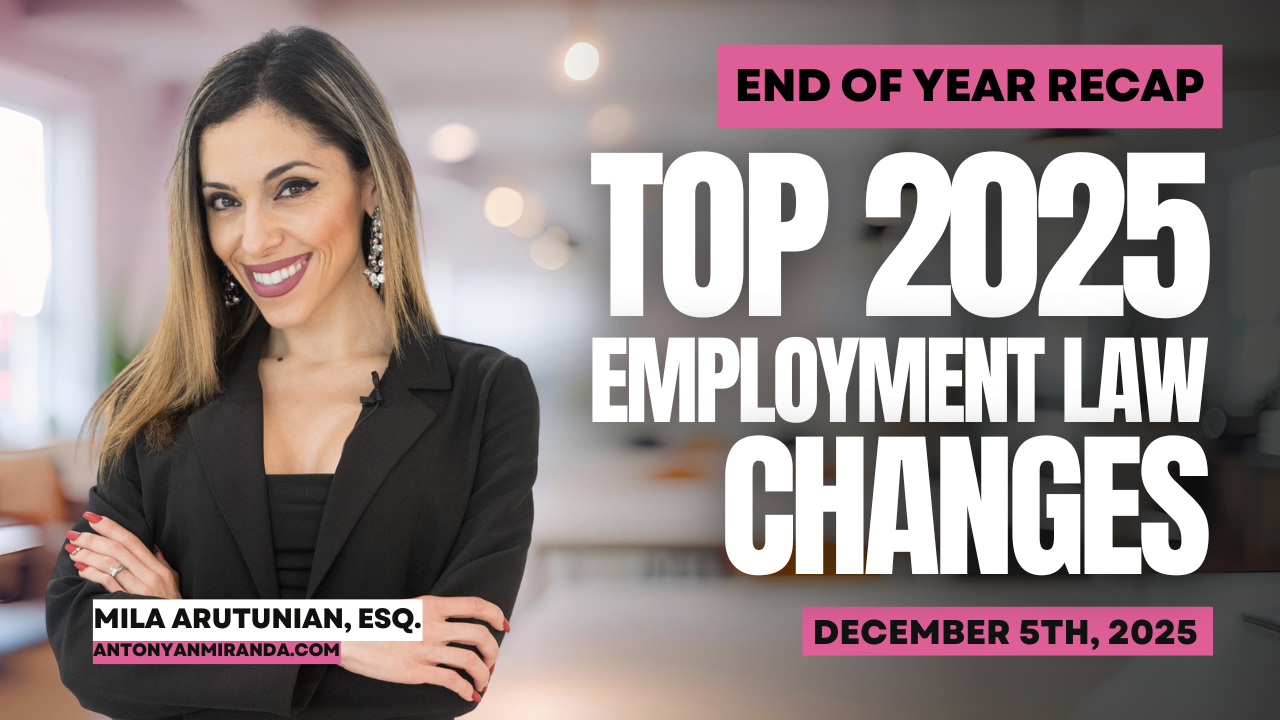
As 2025 comes to an end, California employees are entering one of the most significant periods of workplace reform in recent years. This year’s legislative updates strengthened worker protections, expanded employee rights, and increased employer accountability across nearly every industry. Yet many workers remain unaware of how these changes impact their daily lives, job security, and long-term career stability.
I will also be doing an end of the year rundown in videos, but here are the primary changes you need to know.
California strengthened its long-standing protections against workplace harassment and retaliation. In 2025, the law clarified that harassment does not need to be “severe or pervasive” in the traditional sense. Instead, a pattern of smaller incidents, microaggressions, or repeated disrespectful conduct may be enough to create a hostile work environment.
Retaliation protections were also expanded so employees who raise concerns—whether formally or informally—are shielded from adverse treatment.
California expanded the minimum amount of paid sick leave employers must provide and strengthened the rules that prohibit retaliation when employees use their leave. The law also broadened the permitted uses of sick time.
2025 brought significant new requirements for wage transparency. Employers must provide pay ranges to employees upon request, include salary ranges in job postings, and maintain documentation justifying pay differences.
California increased enforcement efforts targeting employers who improperly classify workers as independent contractors. The state continues to apply the ABC test strictly, meaning many workers previously treated as contractors are legally employees.
2025 clarified one of the most important employee rights: even internal complaints of wrongdoing are protected under whistleblower law. Employees no longer need to report misconduct to an external agency to be shielded from retaliation.
Effective this year, virtually all California employers must implement workplace violence prevention plans. This includes written plans, employee training, reporting protocols, and detailed recordkeeping.
Knowledge is power. When employees understand their rights, they are better equipped to protect themselves and enforce accountability when employers fall short.
If you believe your rights may have been violated—whether through harassment, retaliation, wage theft, misclassification, or unsafe working conditions—consulting with an experienced employment attorney is essential. Early legal guidance can prevent escalation, preserve critical evidence, and protect your career.
E-mail me directly at Emilia@antonyanmiranda.com. The first consultation is always free.
Call us at 619-696-1100 to speak with one of our concierge attorneys or visit us or send us an email.








402 W Broadway. Twenty-First Floor
San Diego, CA 92101
Mobile: 619.696.1100
Email: info@antonyanmiranda.com




All rights reserved Antonyan Miranda, LLP 2025 | Disclaimer | Privacy Statement